


Moving from the classroom into the workplace can be challenging. Knowing the theory is important, but employers also look for people who can apply what they have learned, solve problems, work with others, and handle real tasks with confidence.
This is where vocational training makes a difference. By combining classroom instruction with practical assignments, workshops, instructor demonstrations, teamwork, and industry exposure, learners gain experience that prepares them for real workplace situations.
Learning by Doing
One of the strongest advantages of vocational training is the opportunity to put knowledge into practice.
Instead of only learning concepts from textbooks or presentations, learners work on practical tasks that allow them to test their understanding. These assignments help learners develop technical accuracy, attention to detail, and the ability to work independently.
With every completed task, learners become more familiar with the tools, processes, and responsibilities associated with their chosen field.
Practical Workshops Build Real Skills
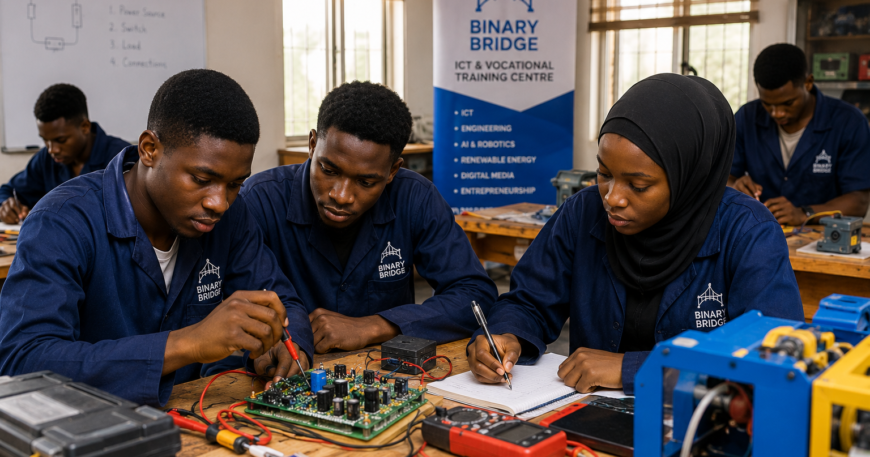
Workshops provide learners with a supervised environment where they can perform technical activities using relevant tools and equipment.
Under the guidance of experienced instructors, learners can practice, make mistakes, troubleshoot problems, and improve their techniques. This hands-on experience helps transform theoretical knowledge into practical competence.
More importantly, repeated practice builds confidence. Learners gradually become more comfortable handling tasks that they may eventually encounter in professional environments.
Instructor Demonstrations Provide Guidance
Practical learning becomes more effective when learners can observe experienced instructors demonstrating how tasks should be performed.
Demonstrations allow learners to see correct procedures, understand professional standards, and learn how to approach technical challenges. Instructors can also provide feedback and guidance, helping learners identify areas that need improvement.
This combination of demonstration, practice, and feedback gives learners a stronger foundation for independent work.
Teamwork Prepares Learners for the Workplace
Most professional environments require people to work as part of a team. Vocational training helps learners develop this ability through group projects and collaborative practical activities.
Working with others teaches learners how to communicate ideas, share responsibilities, solve problems together, and respect different perspectives.
These experiences develop more than technical skills. They also strengthen communication, leadership, responsibility, and teamwork—qualities that are valuable across many careers.
Industry Exposure Connects Training to Reality
Classroom and workshop experience become even more valuable when learners have opportunities to experience real workplaces.
Field visits and industrial attachment expose learners to professional environments where they can observe workplace practices, understand industry expectations, and see how technical skills are applied in real situations.
This exposure helps learners understand that successful careers require more than technical knowledge. Professionalism, discipline, communication, responsibility, and adaptability are equally important.
Building Confidence for Career Success
Career confidence develops through experience.
When learners successfully complete assignments, participate in workshops, collaborate on projects, and experience real workplace environments, they begin to trust their abilities. They become better prepared to approach unfamiliar tasks, solve problems, and adapt to professional expectations.
Vocational training therefore does more than teach a skill—it helps learners develop the confidence to use that skill effectively.
Preparing for the Future
The transition from education to employment becomes easier when learners have already experienced practical learning environments.
At Binary Bridge, the combination of classroom learning, practical assignments, workshops, instructor demonstrations, teamwork, and industry exposure helps learners develop the technical competence and workplace readiness needed to pursue real opportunities.
The goal is simple: turn knowledge into practical skills and practical skills into career confidence.
