


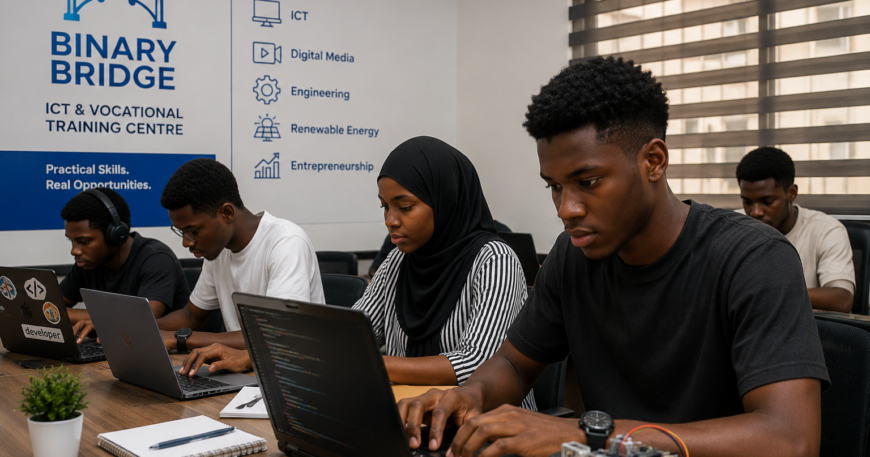
The world of work is changing rapidly, and technology is at the centre of that change. From businesses and education to healthcare, engineering, media, and entrepreneurship, digital tools are transforming how people work and create opportunities.
For young people preparing for the future, developing relevant digital skills can provide a strong foundation for employment, entrepreneurship, and continued learning.
1. Information and Communication Technology (ICT)
ICT skills are useful across almost every modern workplace. Understanding computers, productivity software, digital communication, internet tools, and basic technology operations can help learners work more efficiently and confidently.
ICT also provides a foundation for progressing into more specialized technology careers.
2. Artificial Intelligence
Artificial intelligence is becoming increasingly important across different industries. Learning how AI works and understanding how to use AI tools responsibly can help young people improve productivity, solve problems, automate tasks, and explore new career opportunities.
AI skills are not only for technology professionals. Students, entrepreneurs, creatives, and professionals across different fields can benefit from understanding the technology.
3. Digital Media and Content Creation
Businesses increasingly depend on digital platforms to communicate with customers and promote their products and services.
Skills in areas such as graphic design, video production, photography, social media content, and digital communication can therefore create opportunities for both employment and freelance work.
4. Software and Web Development
Websites, applications, and digital platforms are essential to modern businesses and organizations.
Learning programming, web development, or software-related skills can help young people develop solutions, build digital products, and pursue careers in the technology sector.
More importantly, learning to code develops logical thinking and problem-solving abilities that can be useful beyond programming itself.
5. Digital Problem-Solving
Technology is only useful when people know how to use it to solve real problems.
Young people should develop the ability to identify problems, research possible solutions, use appropriate digital tools, test their ideas, and improve their results.
This combination of technical knowledge and problem-solving can make learners more adaptable in changing work environments.
6. Entrepreneurship and Digital Business Skills
Digital technology has created new ways for people to start and grow businesses.
Understanding online communication, digital marketing, customer engagement, basic business operations, and technology-driven opportunities can help young people turn ideas into sustainable ventures.
Entrepreneurship skills can also complement technical skills, allowing learners to create opportunities rather than only search for employment.
Why These Skills Matter
Learning digital skills is not simply about becoming a technology expert. It is about becoming more adaptable in a technology-driven world.
The most valuable learners are often those who can combine technical skills with communication, creativity, teamwork, critical thinking, and a willingness to continue learning.
Preparing for Tomorrow, Today
The future will continue to introduce new technologies and new ways of working. Some of the tools used today may change, but the ability to learn new technologies and apply them effectively will remain important.
Young people who begin developing digital skills early can build a stronger foundation for future opportunities.
At Binary Bridge ICT & Vocational Training Centre, learners are given opportunities to develop practical, industry-focused skills across areas including Artificial Intelligence, ICT, Engineering, Renewable Energy, Digital Media, and Entrepreneurship.

